
When a slice shows up, most golfers immediately try to fix the downswing, rotate faster, or drill wrist release. In reality most slices are decided before the swing even starts. If your grip, stance and body angles are not set correctly, no amount of swing practice will stop the ball from leaking right. These 3 setup checks are the ones worth looking at first.
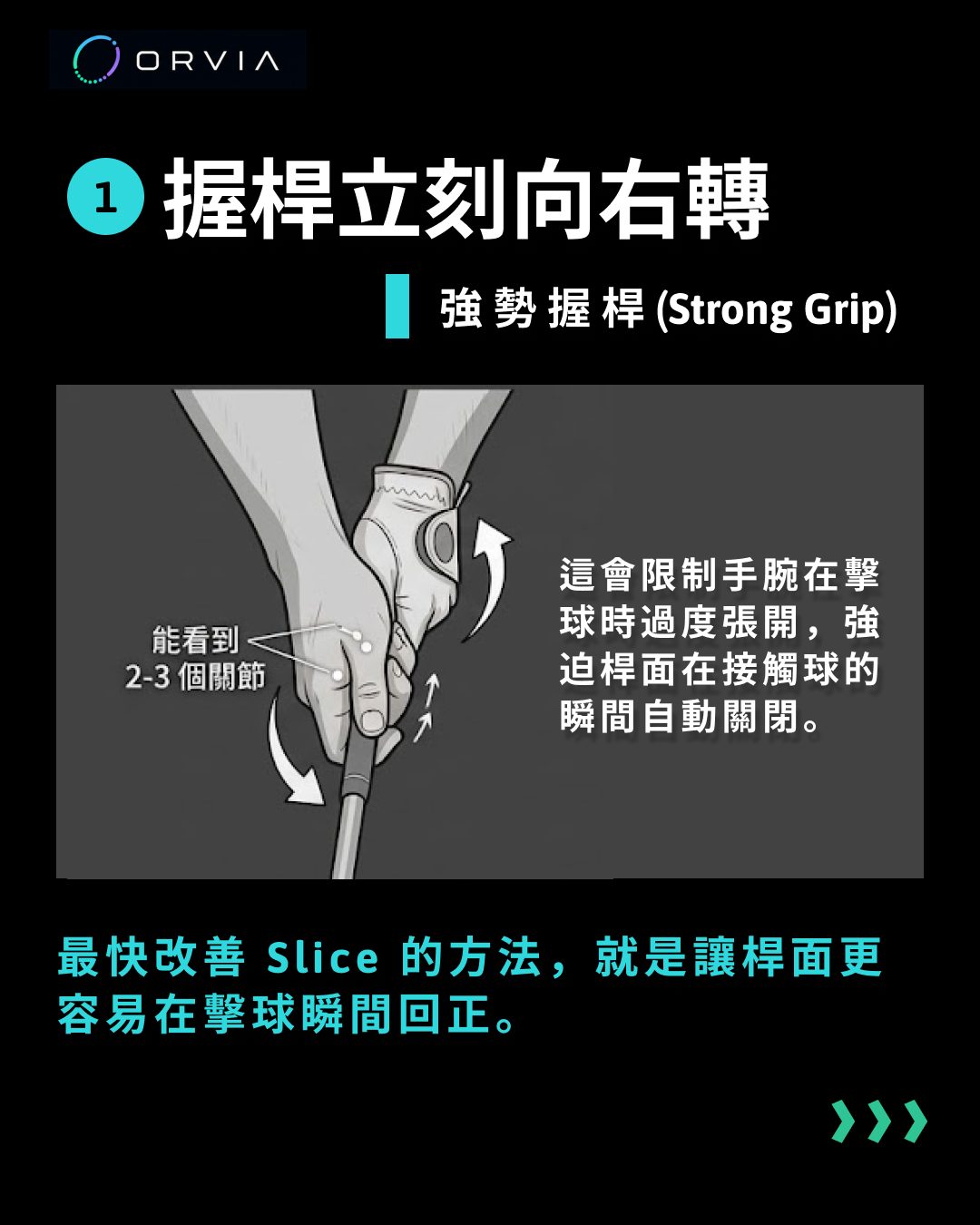
1. A stronger grip helps the face square up on its own Set your grip so you can see roughly 2-3 knuckles on your left hand. A stronger grip reduces the chance of the face staying open through impact and makes it easier for the face to return to square, which cuts down the slice. If your slice is mild, this one change alone can straighten the ball flight immediately.
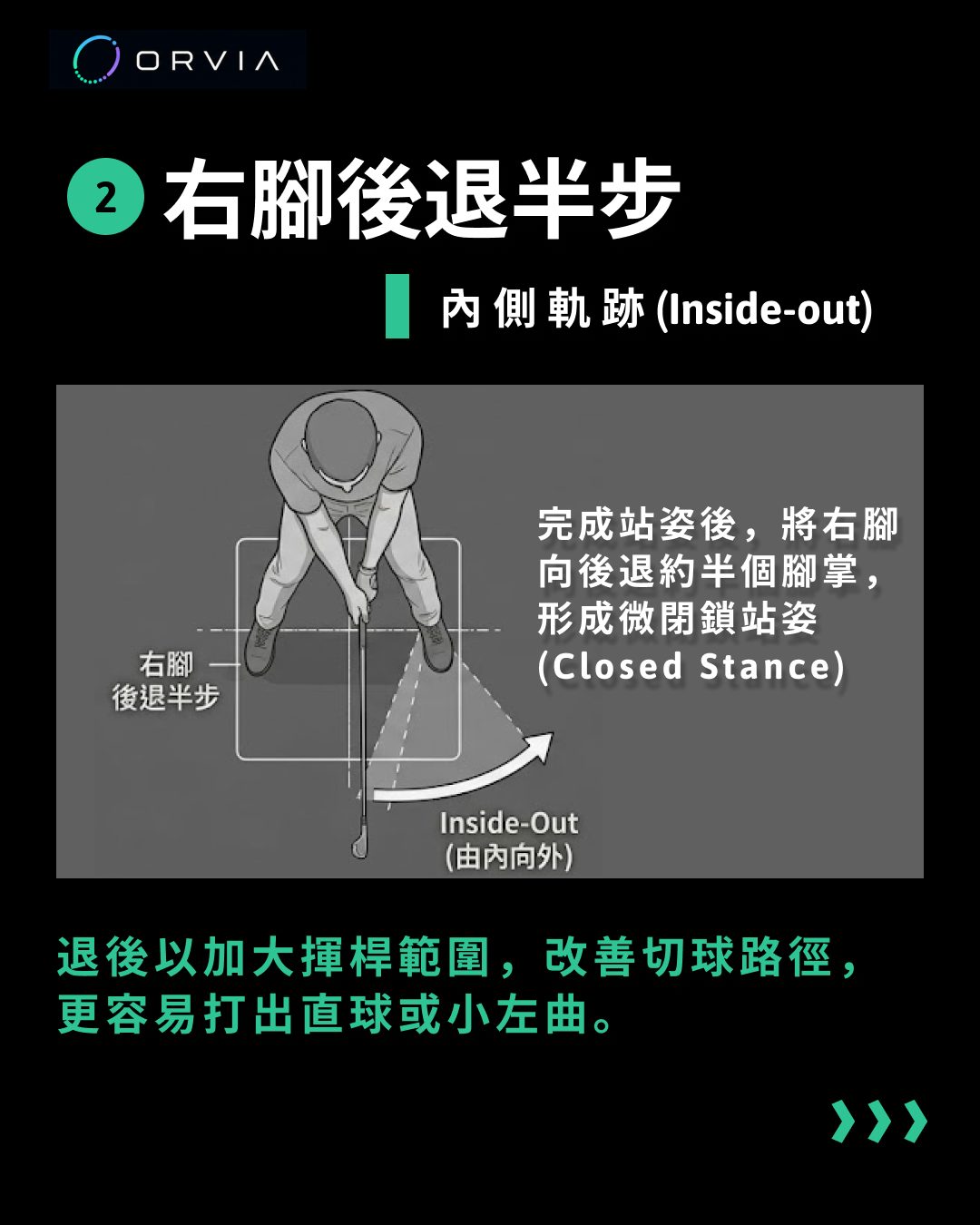
2. Drop your right foot back half a step to build an in-to-out path Once you have taken your stance, pull your right foot back about half a foot length into a slightly closed stance. This creates room on the downswing so the club can approach from inside the target line, reducing the out-to-in cut that causes the slice. For anyone stuck with an out-to-in path, this is an easy change with an obvious payoff.
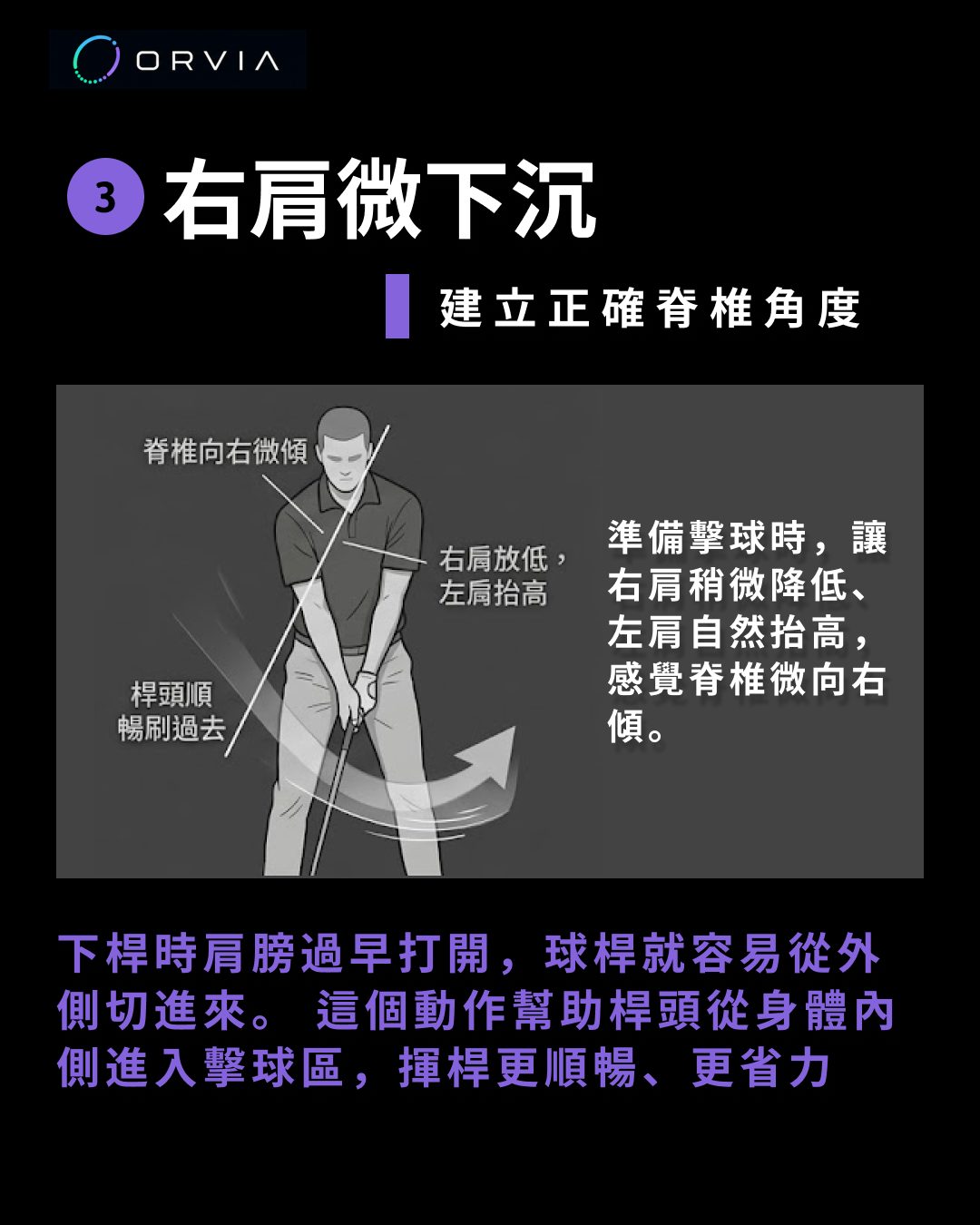
3. Let the right shoulder sit slightly lower to set the correct spine tilt At address, keep your right shoulder a touch lower than your left so the spine leans slightly away from the target. With the shoulders in the right place you are less likely to open the body early in the downswing, and the club head can work from the inside more easily, which improves both consistency and strike quality. Fixing a slice is not only about changing the swing - it is about building the right starting conditions.
A lot of golfers focus on the moment of impact and overlook the fact that what really decides ball flight is the preparation before it. Once grip, stance and body angles are set correctly, add a steady swing tempo and the ball flight straightens out on its own.